
If you're on a private well in Lufkin or anywhere in Angelina County, no one is checking your water for you. Unlike city water, private wells aren't regulated or monitored by any government agency. Testing, treatment, and maintenance are entirely your responsibility.
That's not a scary thing — it's just the reality of well ownership. And once you understand what East Texas groundwater typically looks like, it's not hard to stay ahead of it.
Here's what's actually in your water, how to test it, and what to do if something's off.
What's in the Aquifer Under Lufkin
Most wells in Angelina County pull from the Carrizo Sand or Wilcox Group aquifers. According to the Texas Water Development Board, high iron and manganese content is characteristic of much of the Carrizo-Wilcox Aquifer, and groundwater in the unconfined area is hard and typically has total dissolved solids concentrations less than 1,000 milligrams per liter.
What that means in plain terms: the water is generally fresh and usable, but it almost always needs some treatment before it's ideal for drinking and household use.
Water quality can also vary between neighboring properties. Depth, well construction, and proximity to the lignite and coal layers common in the Wilcox Group all affect what comes out of your tap. Two homes a quarter-mile apart can have noticeably different water.
The Most Common Issues East Texas Well Owners Deal With
1. Iron & Manganese
This is the most common complaint in the area, and the USGS and TWDB data back it up — iron concentrations exceeded the secondary maximum contaminant level of 300 micrograms per liter in multiple Carrizo-Wilcox aquifer samples, and manganese concentrations exceeded the secondary standard of 50 micrograms per liter as well.
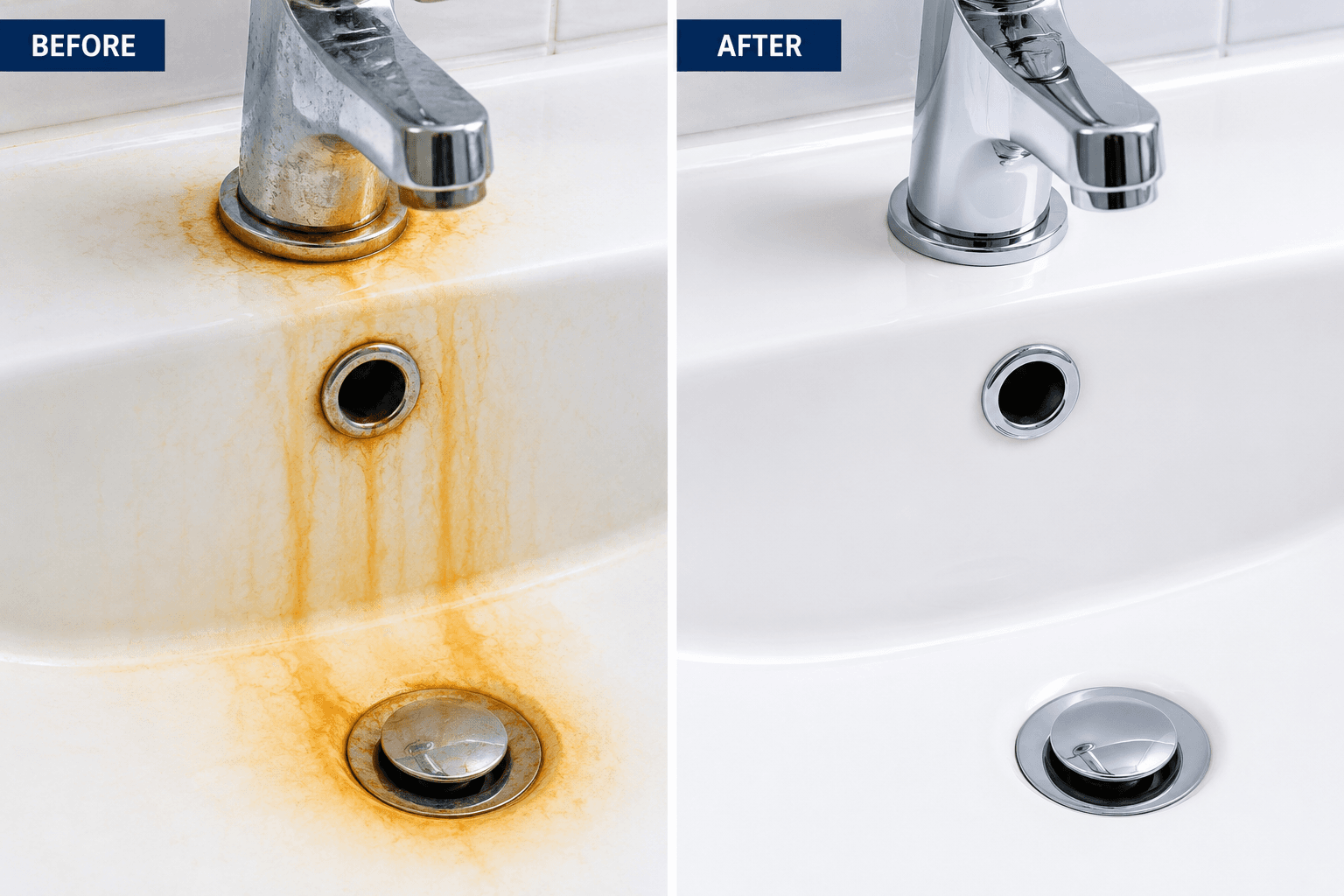
What you'll notice: Orange or reddish-brown stains on sinks, toilets, and laundry. A metallic taste in the water. Over time, it clogs pipes and shortens the life of water heaters and appliances.
Fix: Oxidation filtration combined with a water softener is the standard approach. Budget $3,000–$8,000 depending on severity.
2. Hydrogen Sulfide (That Rotten Egg Smell)
If your water smells like rotten eggs — especially noticeable when running hot water — you have hydrogen sulfide gas. It's common in East Texas wells and is linked to the organic-rich sediments and lignite deposits in the Wilcox formation.
What you'll notice: The smell hits immediately when you turn on the tap, and is usually worse from the hot water side. It's unpleasant but not a health threat at typical well concentrations. It can corrode plumbing over time.
Fix: Aeration systems or activated carbon filtration are the most effective solutions. Budget $3,000–$8,000.
3. Bacteria (Coliform & E. coli)
This one has no obvious signs — your water can look and smell perfectly fine and still test positive for bacteria. Contamination usually happens through a faulty or cracked wellhead seal, flooding, or poor original construction.
Risk: Gastrointestinal illness, particularly for children, elderly, and immunocompromised family members.
Fix: UV disinfection systems are the most reliable solution ($3,000–$8,000). Shock chlorination is used for one-time contamination events after flooding.
4. Hard Water
Hard water is nearly universal with Carrizo-Wilcox wells. It's not a health concern, but it's a nuisance and quietly expensive over time.
What you'll notice: Scale buildup on faucets and showerheads, soap scum, spotty dishes, reduced efficiency in water heaters and appliances.
Fix: A water softener handles this. Budget $3,000–$8,000.
5. Sediment & Cloudiness
Sandy or cloudy water, especially after heavy rain or pump cycling, usually points to inadequate filtration or a well that needs service.
Fix: Whole-house sediment filters, sometimes combined with a well inspection. Budget $3,000–$8,000.
6. Low pH (Acidic Water)
Less common but worth testing for — acidic water corrodes copper pipes and fixtures over time, which can introduce lead and copper into your water supply.
Treatment Cost Reference
Most homes deal with more than one issue at once. A combination system — softener plus iron filter, or softener plus UV — is common and can often be installed by the same driller who built your well.
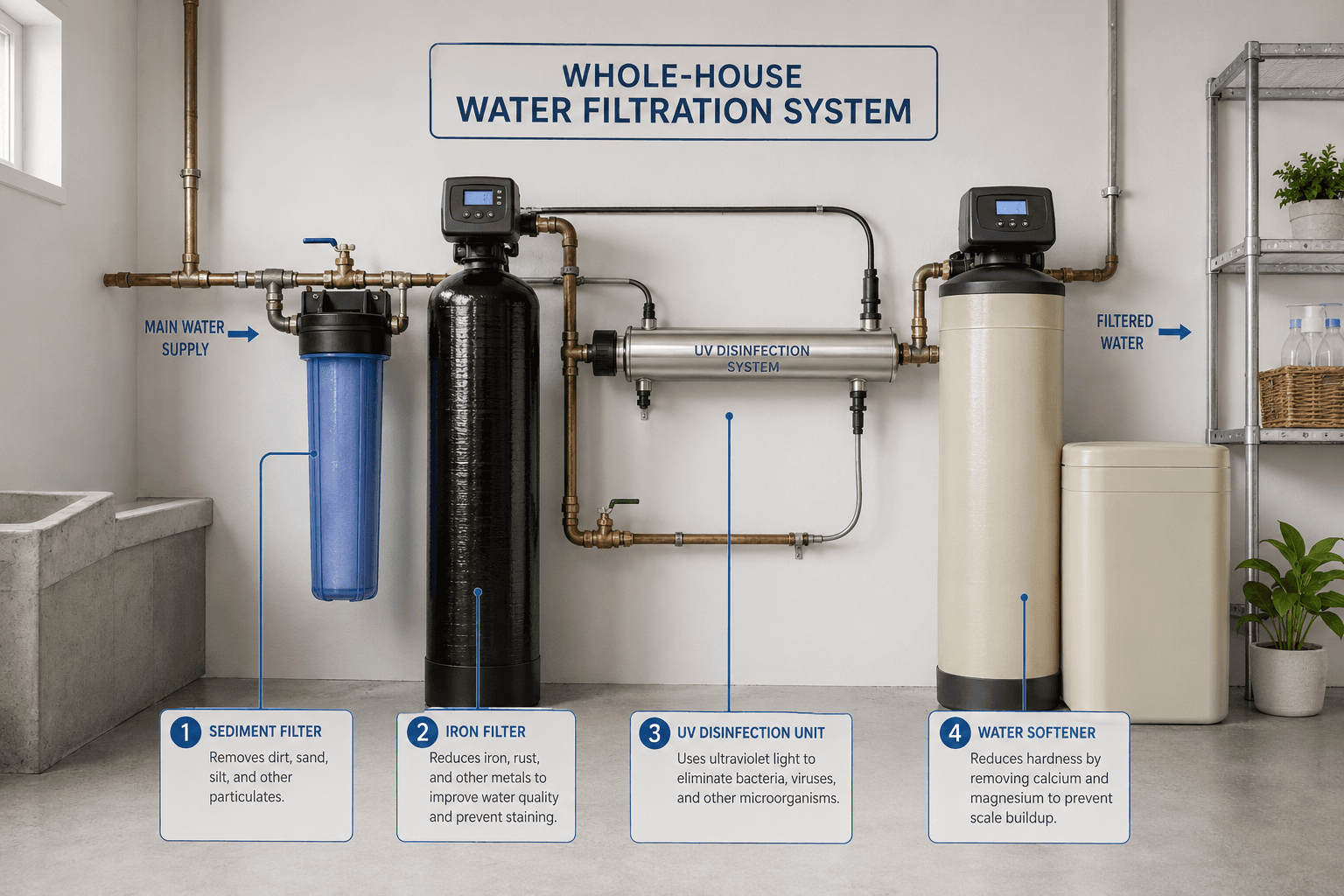
| Iron & Manganese | Oxidation filter + softener | $3,000–$8,000 |
|---|---|---|
| Sulfur smell | Aeration or carbon filtration | $3,000–$8,000 |
| Bacteria | UV disinfection system | $3,000–$8,000 |
| Hard water | Water softener | $3,000–$8,000 |
| Sediment | Whole-house sediment filter | $3,000–$8,000 |
How and Where to Test Your Water in Lufkin
The ANRA Environmental Laboratory is your most convenient local option. Located at 2901 N John Redditt Drive in Lufkin, the ANRA lab performs chemical and microbiological analyses of drinking water for private individuals throughout the East and Deep East Texas area, Monday through Friday, 8 a.m. to 5 p.m.
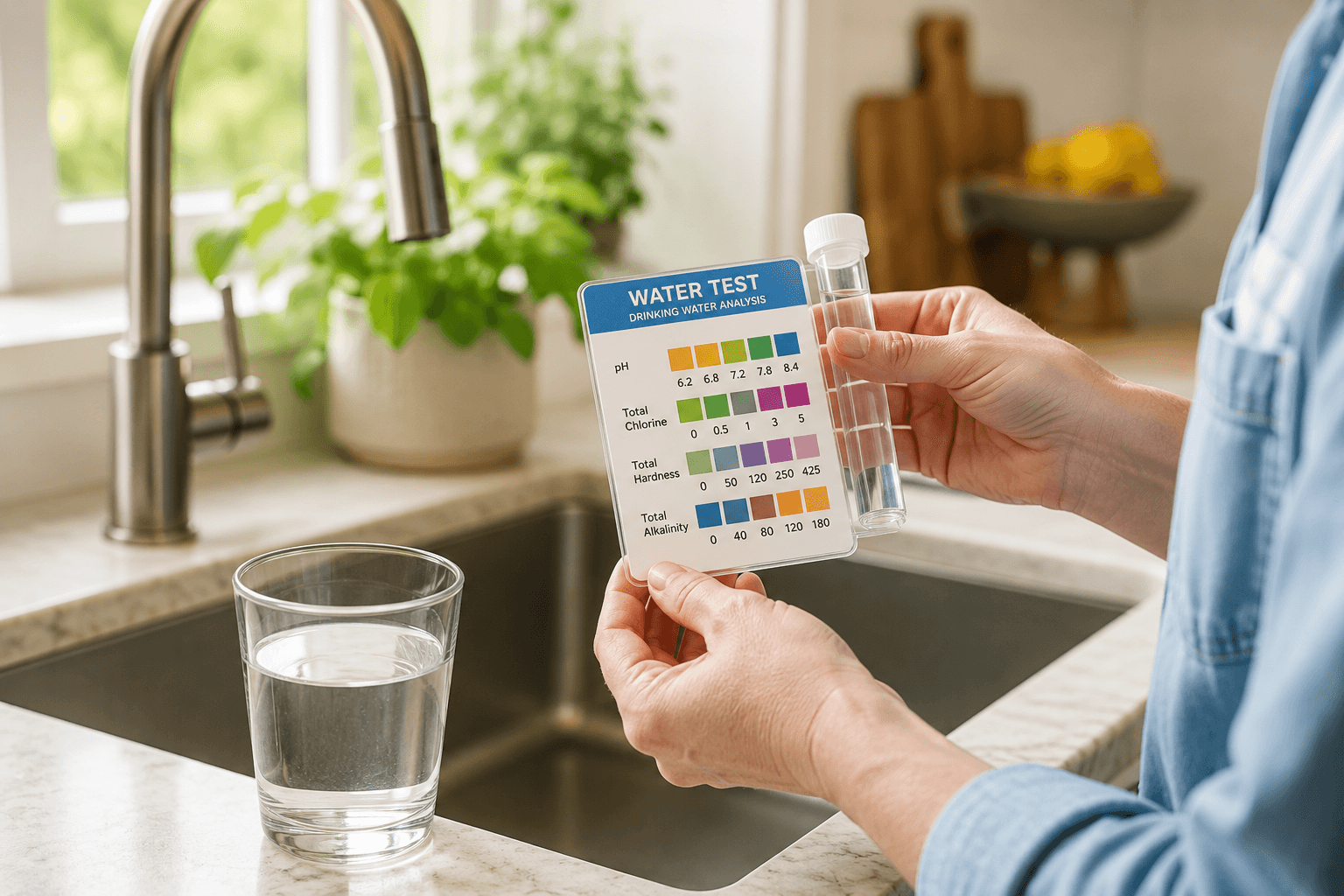
The lab is accredited by the National Environmental Laboratory Accreditation Program (NELAP) for bacteriological examination of drinking water, including Total Coliform and E. coli. They also accept private well samples for broader chemical testing.
Basic bacteria testing typically runs $150–$400. A comprehensive chemical panel is usually $150–$400 depending on the lab and parameters tested.
- New well or new home: Full panel immediately — don't skip this.
- Every year: Bacteria (total coliform + E. coli).
- Every 3–5 years: Full chemical panel (iron, manganese, sulfur, hardness, pH, nitrates).
- After any event: Flooding, nearby construction, or a noticeable change in taste, smell, or appearance.
Keeping Your Well Healthy: Basic Maintenance
- Keep the wellhead at least 12–18 inches above ground and clear of debris, soil, and standing water.
- Inspect the well cap and seal annually — a cracked or missing cap is the most common entry point for bacteria.
- Keep septic systems, chemical storage, and fertilizers well away from the well.
- Have a licensed driller inspect the well every 5–10 years, or sooner if you notice changes in water quality or pressure.
Frequently Asked Questions
Is well water in Lufkin safe to drink?
It can be, but most wells in Angelina County benefit from at least some treatment — typically for iron and hardness at minimum. Get it tested first, then treat based on what you actually find.
How much does well water testing cost?
A basic bacteria test runs $150–$400 at the ANRA lab. A full chemical panel is typically $150–$400.
How do I get rid of the rotten egg smell?
Hydrogen sulfide is the culprit. An aeration system or activated carbon filtration will eliminate it. A local Lufkin driller who knows the area's water chemistry can recommend the right setup for your specific well.
What's the best treatment system for a Lufkin well?
Most homes need a combination: a water softener or iron filter for minerals, plus UV disinfection if bacteria is a concern. Many homeowners also add a reverse osmosis unit at the kitchen tap for drinking and cooking water.
How often should I test?
Bacteria annually at minimum. Full chemical panel every 3–5 years, or anytime something seems off — new smell, new color, new taste.
Do newer wells have better water quality?
Generally yes. Modern casing and grouting standards significantly reduce contamination risk compared to older wells. If you're buying a property with an existing well, get it tested and inspected before closing.
Should I connect to city water instead?
For properties inside Lufkin city limits, city water may be the simpler path. For rural Angelina County properties, a private well is often more economical long-term. The right answer depends on your location and how far a city connection would run.
How do I find a reliable driller or water treatment specialist in Lufkin?
Verify any driller's TDLR license before you hire. Ask specifically for references in Angelina County — local experience with local geology matters. Get at least three written quotes.
Need a Local Well Pro?
Compare local Lufkin-area water well companies, then verify current TDLR licensing, insurance, references, and written scope before hiring.
Compare Lufkin Water Well Drillers →Related Reading
Sources: Texas Water Development Board — Carrizo-Wilcox Aquifer, USGS Trinity River Basin Water Quality Assessment, ANRA Environmental Laboratory, TDLR Water Well Drillers Program.