
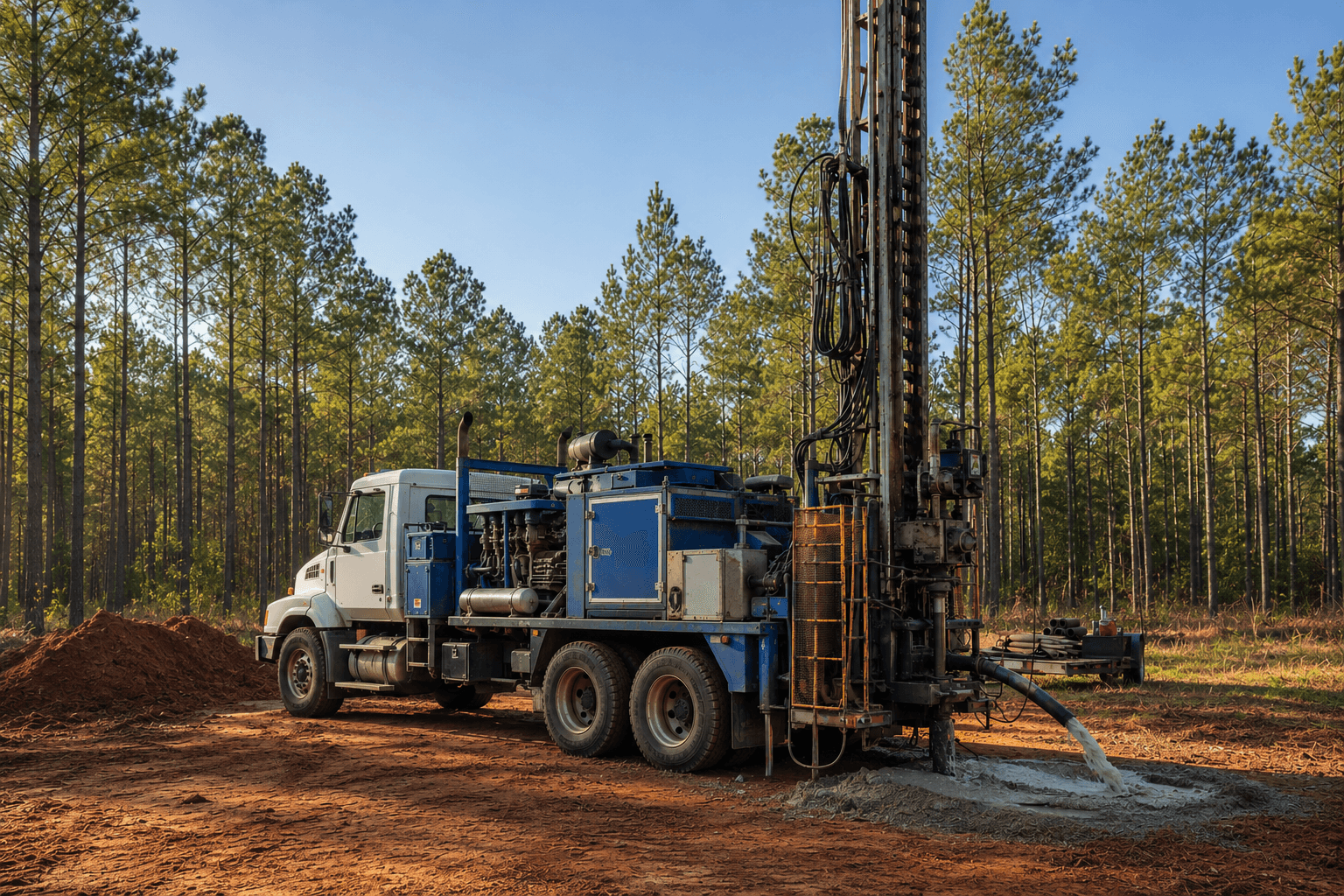
If you are pricing a new well in Lufkin or Angelina County, the first questions are usually the same: how much will the full job cost, and what does the local permit path require before work starts? This guide answers both up front so you can compare local quotes without missing a permit or compliance detail.
East Texas is one of the more affordable places in the state to drill a well, and Angelina County homeowners still have a local district permit path to check before the crew shows up.
What Does a Water Well Cost in Lufkin in 2026?
For a complete residential water well in Lufkin — that means drilling, casing, pump, pressure tank, and startup — most homeowners pay somewhere between $5,500–$8,500.
That is noticeably cheaper than Central or West Texas, where harder geology and deeper wells push the total much higher. The reason is simple: East Texas geology is forgiving. You are drilling through sand and clay, not limestone and bedrock, and the aquifers here sit at shallow depths.
Drilling rates in East Texas typically run $25–$55/ft, depending on formation difficulty, casing type, and which driller you hire. Most residential wells in the area come in between 150 and 250 feet deep.
Typical Cost Breakdown (180–200 ft residential well)
| Drilling & casing | $5,500–$8,500 |
|---|---|
| Submersible pump + pressure tank | $2,500–$5,500 |
| Water testing & startup | $150–$400 |
| Permits & state well report | Usually included by the driller |
| Total | $5,500–$8,500 |
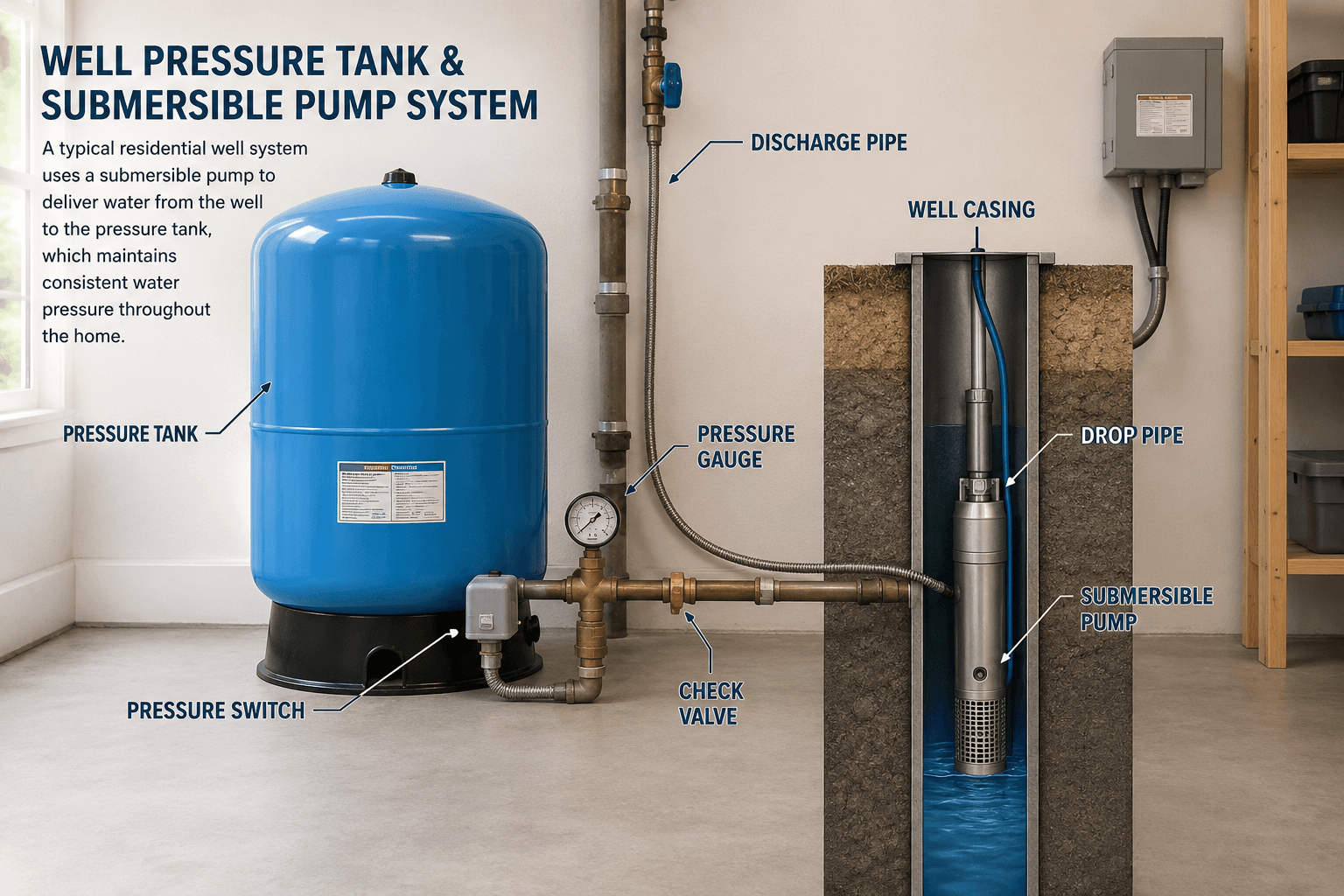
- Depth — every extra foot costs money, and neighboring lots can have surprisingly different water table depths.
- Casing material — steel costs more than PVC but lasts longer; some formations may require it.
- Water quality — if your water has iron or sulfur issues, you may need treatment equipment on top of the well itself.
- Site access — wooded lots, slopes, or tight spaces add complexity and time.
Water Well Cost Estimator
Adjust the inputs below to get a planning estimate for your property.
Estimates reflect 2026 East Texas planning ranges. Get 3+ written quotes and verify the driller's current TDLR license before committing.
Find Lufkin Water Well Drillers →The Geology Under Your Feet
Most wells in Angelina County pull from the Carrizo-Wilcox Aquifer, a major East Texas formation that stretches from the Red River south toward the Gulf Coast. It is a reliable source with generally good yields at residential depths.
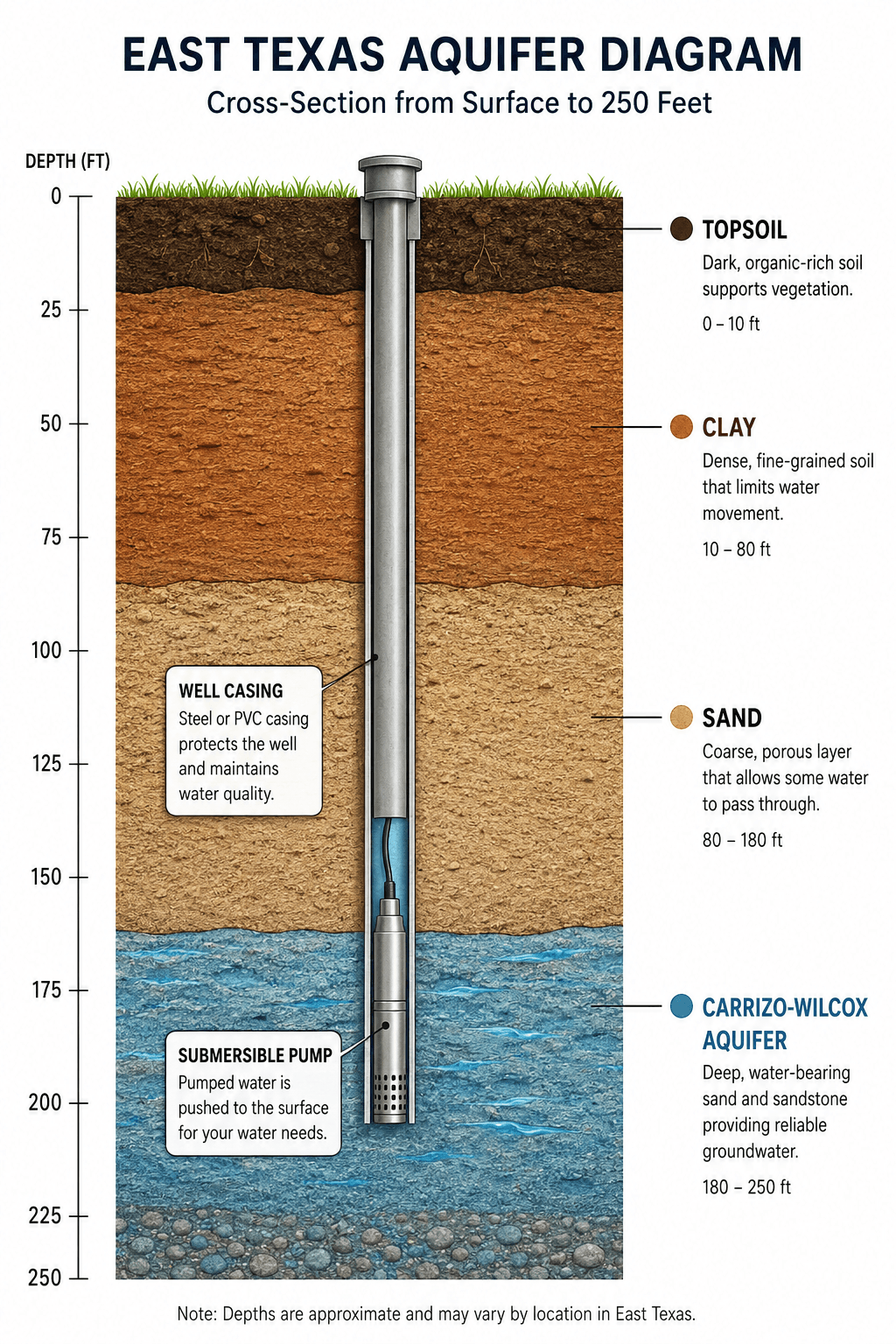
Typical residential wells hit water somewhere between 150 and 250 feet. In some spots you will find usable water closer to 100 feet; in others you may need to go past 300 feet for better quality or flow.
Two properties a quarter-mile apart can have very different drilling experiences. Prioritize drillers who know Angelina County well logs and have recent references near your specific area.
Permitting: Less Hassle Than You'd Think
Use the Pineywoods Groundwater Conservation District path as the local rule set for Angelina County. PGCD says it issues water well permits and operating permits for exempt and non-exempt wells, and its forms page lists the well application, flowchart, minimum distance chart, and spacing-exception requests. That means the local permit path can include PGCD forms or spacing review, so it is not the same as having no local district step at all.
That said, a local district permit path does not replace the state rules. Your driller still needs an active Texas license, the well still has to meet state setback rules, and properties inside a city, subdivision, or deed-restricted development can still have utility or site-approval requirements that belong in the written quote.
- Your driller must be licensed by the Texas Department of Licensing and Regulation (TDLR). This is state law.
- After the well is complete, the driller files a State Well Report through the TDLR and TWDB reporting system within 60 days.
- State minimum setback rules apply: at least 50 feet from a septic tank and 100 feet from drain fields or spray areas.
To verify a driller's license, use the TDLR license search tool at tdlr.texas.gov. It takes 30 seconds and tells you whether their license is current and in good standing.
Permit checklist
- Ask whether the quote includes PGCD permit review, utility locates, and septic-distance checks.
- Confirm the driller's active TDLR license number before paying a deposit.
- Make sure the contract says who files the State Well Report after completion.
- Ask whether city or subdivision rules add any approval steps beyond the normal county setup.
How to Compare Local Well Drillers
- Verify their TDLR license — active, not expired or suspended.
- Get at least 3 written, itemized quotes — not ballpark figures over the phone.
- Ask for references in Angelina County specifically.
- Confirm the quote is all-in: drilling, casing, pump, pressure tank, water testing, and disinfection.
- Ask about insurance and bonding.
- Understand the warranty — both on the well bore and the equipment installed.
- Do not pay the full amount upfront. A deposit is normal; full payment before work is a red flag.
Watch out for: bids that are dramatically cheaper than everyone else, high-pressure tactics to sign quickly, and any contractor who will not give you local references.
East Texas Water Quality: What to Expect
Angelina County groundwater is generally safe and drinkable, but a few issues come up routinely enough that you should budget for them:
- Iron and manganese — stains fixtures and laundry orange or brown.
- Hydrogen sulfide — the rotten-egg smell you might notice.
- Bacteria — especially after heavy rainfall or if a wellhead is not properly protected.
- Sediment — can affect flow during dry spells.
Get your water tested after the well is drilled. A basic panel runs $150–$400. If treatment is needed, budget an additional $3,000–$8,000 for filtration or softening equipment. For a deeper local breakdown of iron, sulfur, and bacteria issues around Lufkin wells, review the water quality guide before choosing a treatment system.
Well vs. City Water: Does It Make Financial Sense?
If you are outside Lufkin's city limits or in an area where connecting to municipal water would require a line extension, a private well often wins financially over a 5 to 10 year horizon. Your ongoing costs drop to electricity for the pump and annual maintenance that stays well below a full utility bill.
The tradeoff: you own the well, which means you are responsible for testing, maintenance, and repairs. It is not a set-it-and-forget-it situation. But for the right property and the right owner, it can be a good long-term investment.
A Note on the Carrizo-Wilcox Aquifer
There has been ongoing public discussion in Texas about proposals to pump and transport Carrizo-Wilcox water out of East Texas for use in other regions. Lufkin-area residents have had understandable concerns about what large-scale exports could mean for local groundwater levels.
For residential well owners, the practical takeaway is this: properly constructed domestic wells remain low-impact and reliable, and a good driller will site and build your well to perform for decades. If you want to stay informed on aquifer policy, the Texas Water Development Board publishes groundwater availability reports for the region.
Ready to Get Quotes?
The information above gives you a solid baseline, but the only number that actually matters is what a local driller quotes for your specific property.
Quick Reference: Lufkin Well Costs at a Glance
| Complete residential well (installed) | $5,500–$8,500 |
|---|---|
| Drilling rate per foot | $25–$55/ft |
| Most common well depth | 150 – 250 ft |
| Pump + pressure tank | $2,500–$5,500 |
| Water testing | $150–$400 |
| Water treatment (if needed) | $3,000–$8,000 |
| County/GCD permit required? | PGCD permit path applies in Angelina County |
| TDLR license required (driller)? | Yes |
Angelina County permit and cost FAQ
Questions homeowners ask before drilling
Do you need a permit to drill a water well in Angelina County, Texas?
Use the Pineywoods Groundwater Conservation District path as the local rule set: PGCD says it issues water well permits and operating permits for exempt and non-exempt wells, and its forms page lists the well application, flowchart, minimum distance chart, and spacing-exception requests. Homeowners still need a licensed Texas driller and a State Well Report filed after completion.
How much does a water well cost in Angelina County or Lufkin, TX?
Many straightforward residential wells in the Lufkin and Angelina County market land around $5,500–$8,500 for drilling, casing, pump, pressure tank, and startup. Final price changes with depth, casing, access, water quality treatment, and any unusual site work.
Who files the paperwork for a new well in Angelina County?
In most cases the licensed driller handles the required state well report after the job is finished. Before work starts, ask who is responsible for PGCD forms, setbacks, septic-distance checks, utility locates, and any city-specific approvals if the property is inside a municipality or subdivision with extra rules.
What permit or compliance checks should be on a well drilling quote?
The written quote should say whether permit review is included, confirm the driller's active TDLR license, note required setbacks from septic and fuel storage, explain who files the State Well Report, and separate drilling footage from the complete installed-system cost.
Pricing ranges reflect 2026 East Texas market data from contractor surveys and regional cost research. Individual quotes will vary based on site conditions, depth, and equipment selection. Always get multiple written estimates.
Sources: Pineywoods Groundwater Conservation District mission, PGCD forms and flowcharts, Texas Department of Licensing and Regulation water well page, and Texas Water Development Board groundwater FAQ.